Logistics & supply chain digital twins for predictable, high-flow operations
Model warehouses, yards, ports, fleets, and routes as living digital twins—so you can anticipate congestion, improve flow, and protect service levels across your network.
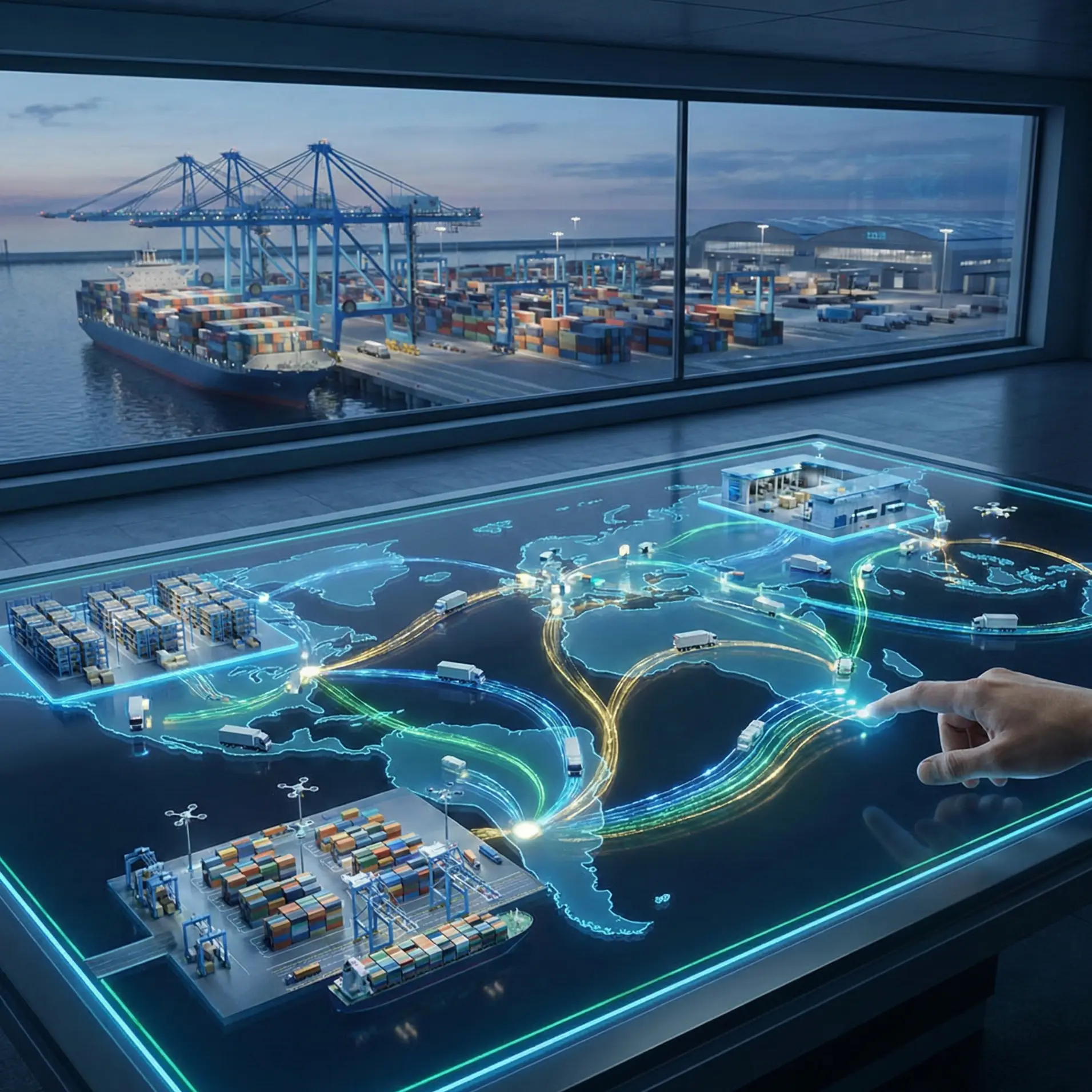
Supply chains are only as strong as their weakest node
Logistics and supply chain teams operate in environments where small disruptions quickly cascade. When flow spans many interconnected nodes, local optimization isn't enough.
What's breaking the flow
Limited end-to-end visibility across warehouses, yards, and transport
Congestion that appears suddenly and is hard to predict
Schedules that break down under real-world variability
Firefighting to protect OTIF and customer commitments
Decisions made locally that create downstream problems
The network advantage
Predict and prevent congestion before it impacts flow
Coordinate decisions across the entire network
Build resilient schedules that adapt to real conditions
Balance OTIF with operational efficiency
Understand and manage system-wide dependencies
From reactive control to predictive flow management
In logistics and supply chains, an intelligent digital twin provides a living model of how goods, vehicles, and resources move through the network.
It continuously represents:
Warehouse operations, yard movements, and terminal activity
Transport schedules, arrival patterns, and dwell times
Constraints such as labor availability, equipment, and space
How disruptions in one node affect downstream performance
With an intelligent digital twin, teams can:
Predict congestion before it materializes
Test alternative schedules, routing, or staffing scenarios
Coordinate decisions across sites instead of in silos
Protect service levels without constant manual intervention
Logistics use cases powered by intelligent digital twins
Value across logistics and supply chain roles
Operations & control tower teams
Monitor network health in near real time
Spot risks to service levels early
Coordinate actions across sites instead of reacting in isolation
Warehouse & yard managers
Understand where congestion is building
Adjust staffing, appointments, and sequencing proactively
Reduce last-minute disruptions
Network planners & analysts
Evaluate changes to routes, schedules, and capacity
Test "what-if" scenarios before implementation
Support data-driven network design and improvement
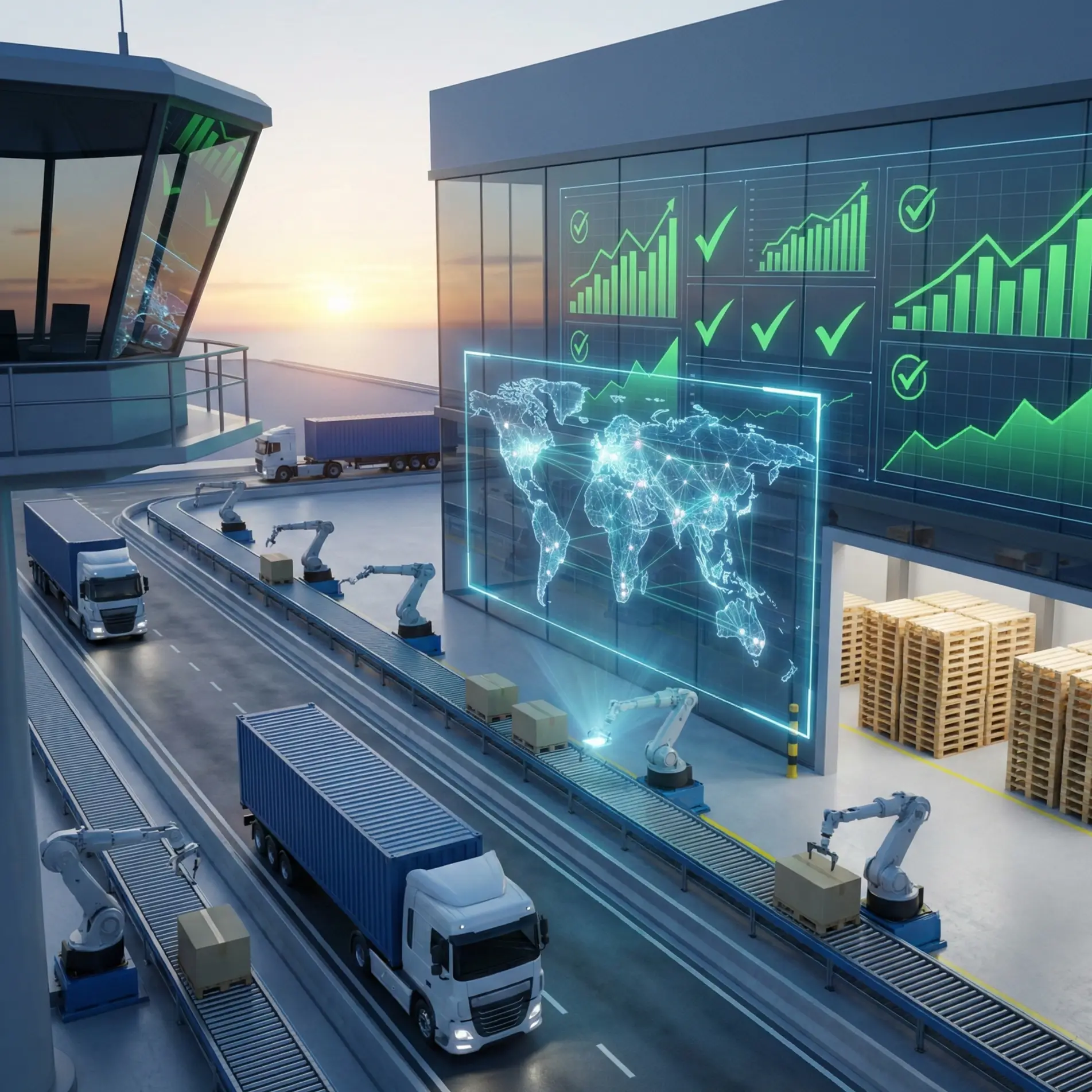

What logistics teams typically target
Outcomes depend on network complexity and starting point, but teams often aim for:
20–30%
Reduction in unplanned downtime
Improved
OTIF and service reliability
Reduced
dwell time at critical nodes
Better
network predictability
Better asset, labor, and space utilization
Fewer last-minute schedule changes and expediting
The biggest gains usually come from anticipating issues—rather than reacting once queues form.
Start with one node or flow. Prove value. Scale network-wide.
Start
Choose a high-impact area: a congested warehouse, busy yard, port terminal, or critical transport lane.
Prove
Use real operational data to validate predictions and improvements.
Scale
Extend the twin across additional sites, flows, and scenarios—reusing what works.
Common questions from logistics teams
See how intelligent digital twins can improve supply chain flow
Start with one logistics challenge—visibility, congestion, or reliability—and build from there.