Emergency simulation that builds readiness—without real-world risk
Use intelligent digital twins to simulate emergencies, disruptions, and safety scenarios before they happen—so teams can practice response, understand cascading impacts, and act with confidence when it matters most.
Why emergency planning often fails in practice
Organizations invest heavily in safety plans and emergency procedures—yet many discover gaps only during real incidents. When the cost of failure is high, planning based on assumptions is not enough.
What's limiting preparedness
Tabletop exercises that don't reflect real conditions
Static plans that fail under dynamic, fast-moving events
Limited understanding of cascading failures across systems
Coordination issues between teams and agencies
Inability to test "what-if" scenarios safely
The simulation advantage
Practice reality without real-world consequences
Test dynamic scenarios that evolve over time
Understand how disruptions cascade across systems
Improve coordination between teams and agencies
Build confidence through realistic preparation
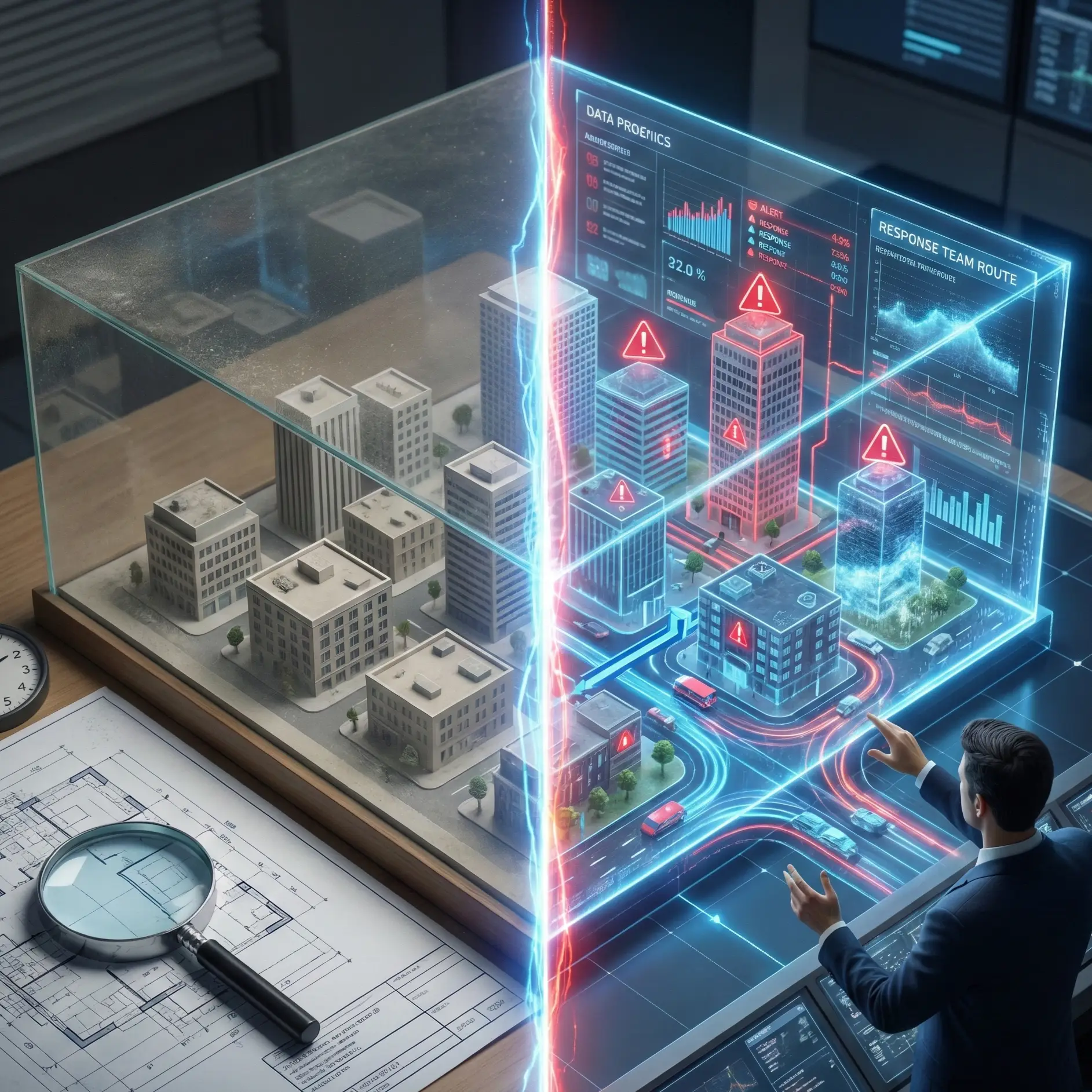
From static plans to living scenario models
This solution applies the intelligent digital twin model to a specific operational challenge. For a full explanation of the model itself, see:
What is an Intelligent Digital TwinWith intelligent digital twins, emergency simulation becomes a realistic, system-level rehearsal environment.
How emergency simulation applies the intelligent digital twin model:
Represents assets, infrastructure, people, and dependencies
Models how disruptions propagate across systems
Reflects real operating constraints and response actions
Allows scenarios to evolve dynamically—not follow scripts
This enables teams to see not just what happens first, but what happens next—and how decisions change outcomes.
A practical simulation loop
Model the environment
Create a digital representation of facilities, infrastructure, or city systems.
Define scenarios
Introduce events such as equipment failure, outages, weather events, or accidents.
Simulate response and impact
See how systems, teams, and dependencies react over time.
Evaluate decisions
Compare response strategies, timing, and coordination.
Improve preparedness
Refine plans, train teams, and reduce risk—before a real event occurs.
Where emergency simulation delivers the most value

Industrial safety & incident response
Prepare for high-risk operational events.
Simulate equipment failures, fires, or hazardous releases
Practice response without disrupting production
Improve coordination between safety and operations teams

Outage & infrastructure disruption planning
Plan for failures that cascade.
Test outage and restoration scenarios
Understand downstream impacts on service and safety
Improve resilience and response timing

City & public safety simulation
Coordinate across agencies.
Simulate floods, accidents, evacuations, or extreme weather
Practice multi-agency response and communication
Improve preparedness without public risk

Training & preparedness
Practice without pressure.
Train teams in realistic environments
Capture lessons learned systematically
Reduce reliance on rare live drills
Used across safety, operations, and planning roles
Safety & EHS leaders
Identify gaps in procedures and response plans
Validate readiness for high-impact scenarios
Improve compliance and audit confidence
Operations & control teams
Understand how disruptions affect real operations
Practice decision-making under pressure
Reduce confusion during live incidents
Planners & emergency managers
Evaluate preparedness strategies
Improve coordination across teams and agencies
Support evidence-based resilience planning
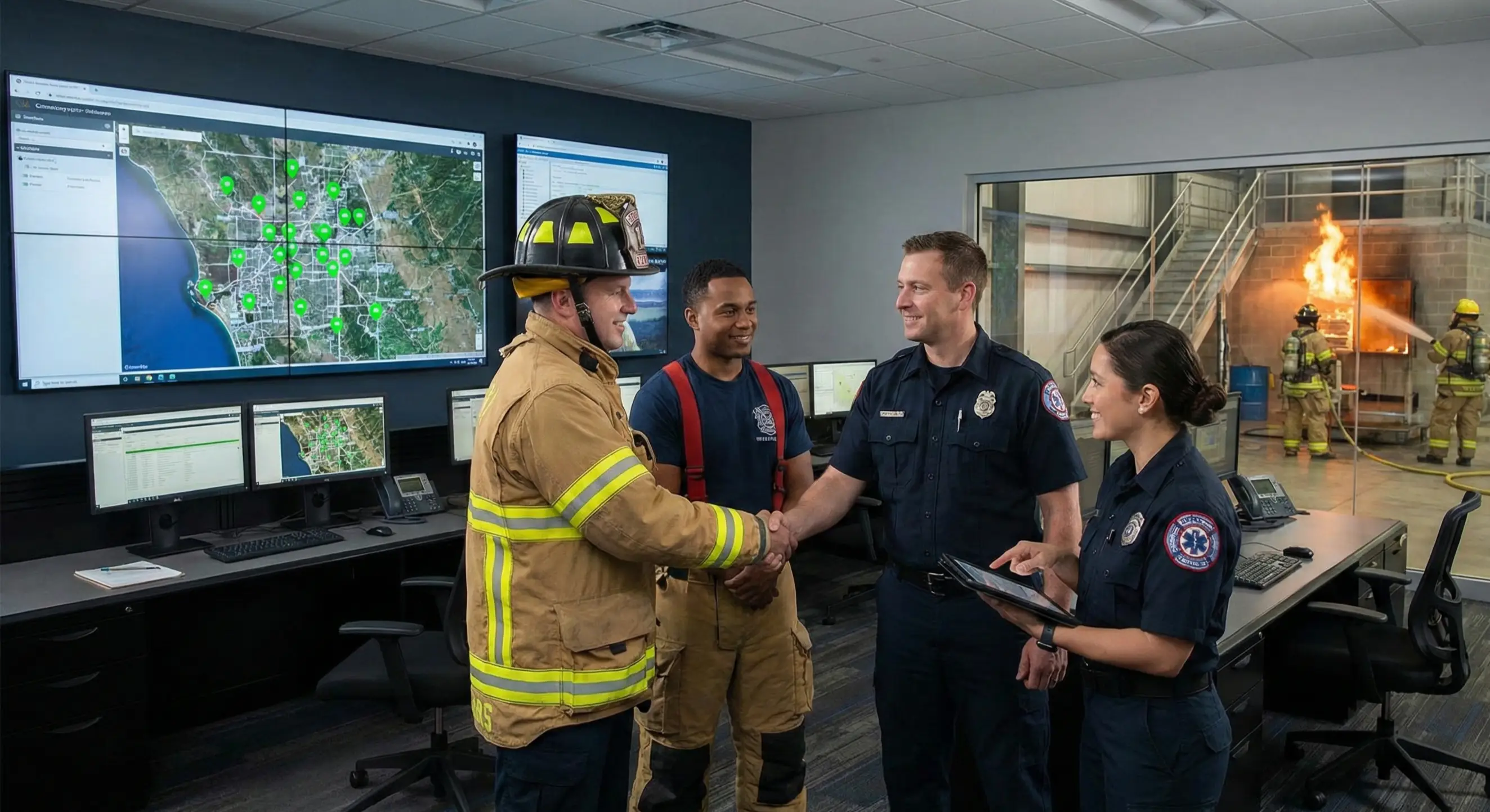

What teams typically achieve
Outcomes vary by scenario and scope, but organizations often see:
Improved
emergency preparedness
Faster
coordinated response
Reduced
risk to people & assets
Better understanding of system-wide vulnerabilities
Higher confidence in plans and training programs
The biggest value comes from learning before a real incident occurs.
Start with one scenario. Prove value. Expand.
Start
Choose a high-risk or high-impact scenario that teams worry about most.
Prove
Simulate realistic events and validate insights with stakeholders.
Scale
Expand to additional scenarios, sites, or systems using the same framework.
Common questions about emergency simulation
Practice emergencies before they become real
Build readiness, coordination, and confidence—without putting people or operations at risk.