Data ingestion & integration that turns messy operational data into twin-ready intelligence
Connect OT, IT, and engineering data—reliably and securely—so your digital twins stay synchronized with reality. Normalize and contextualize signals from machines, buildings, grids, and networks into a single decision-ready foundation..

What is data ingestion & integration in an intelligent digital twin platform?
Data ingestion and integration is the process of continuously collecting data from operational and enterprise systems, standardizing it, adding context (which asset it belongs to, where it is, and what state it represents), validating data quality, and making it available to models, simulations, analytics, and applications. In an intelligent digital twin, integration isn’t just about moving data—it’s about making data trustworthy and usable for real-world decisions.
Connect the systems you already run
Operational (OT) sources
SCADA / DCS
PLC data streams
Historians
BMS (building management systems)
Enterprise (IT) sources
ERP
EAM / CMMS
MES
Asset registries / master data
IoT and streaming sources
Sensors and gateways
Event streams and telemetry
Edge devices and on-site collectors
External and contextual sources
Weather and tariff signals (when relevant)
GIS / geospatial layers
Vendor or partner feeds
From raw signals to twin-ready data
STEP 1
Connect
Ingest real-time and batch data from operational and enterprise systems without forcing a rip-and-replace.
STEP 2
Normalize
Standardize units, timestamps, naming, and formats so metrics can be compared and trended reliably.
STEP 3
Contextualize
Map signals to assets, locations, and process structure—so the twin understands what the data represents, not just the number.
STEP 4
Validate
Detect missing data, anomalies, out-of-range values, and schema drift early—before it breaks downstream models.
STEP 5
Publish
Make clean, governed data available to dashboards, simulations, predictive workflows, and APIs.
Built for operational reality
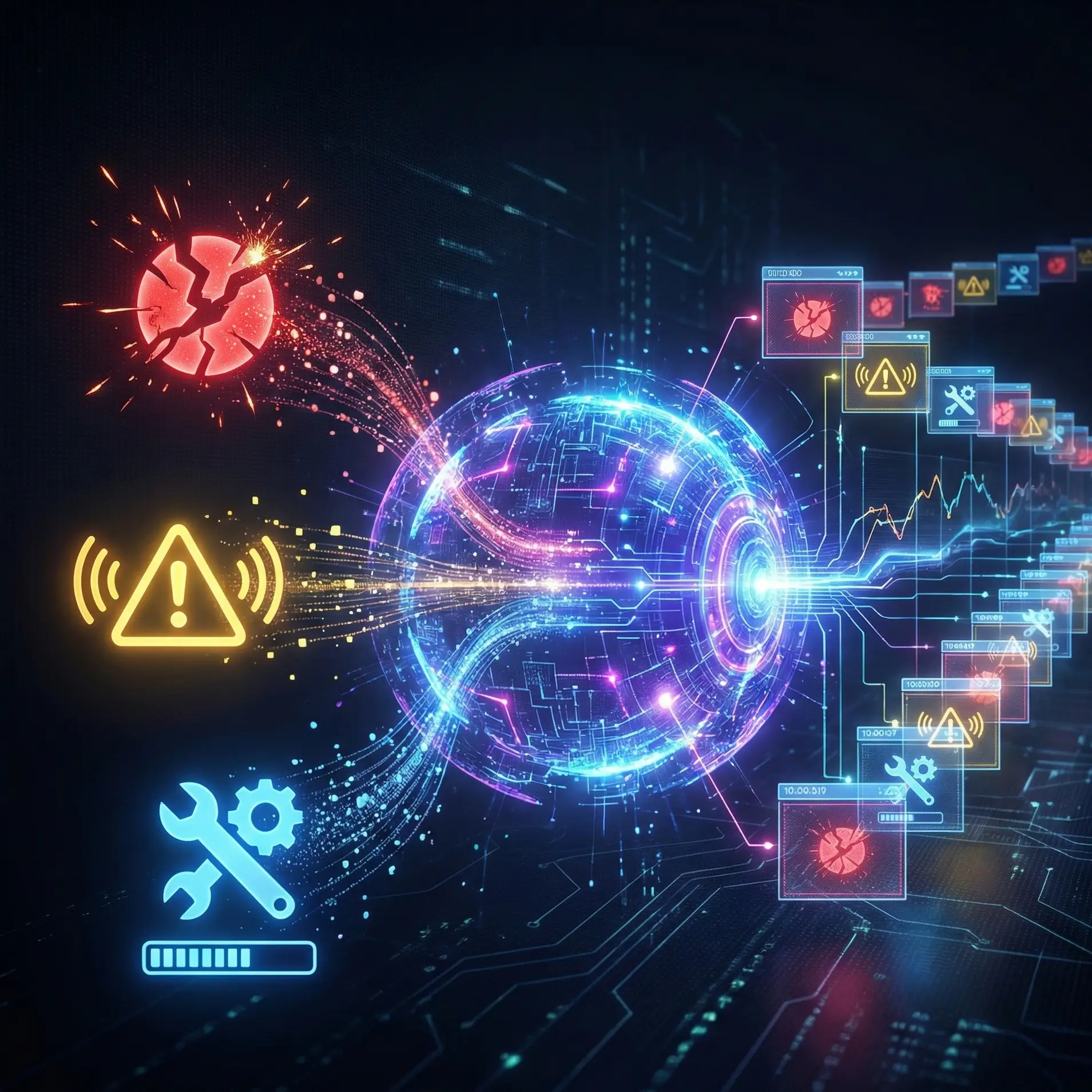
1.
Real-time + batch ingestion
Support continuous monitoring where seconds matter, and batch ingestion where systems update on schedules.
2.
Semantic mapping and contextual models
3.
Event handling and change tracking
4.
Data governance and access control
5.
Monitoring and reliability

Integration Approaches Teams Use in Practice
When data is twin-ready, everything downstream gets easier

Faster time-to-value for predictive maintenance, optimization, and simulation
Fewer data disputes ("Which dashboard is correct?") because definitions and context are consistent
More accurate predictions because models see the full operating picture, not isolated signals
Better what-if simulation because relationships between assets and constraints are captured
Stronger operational resilience through continuous monitoring and early detection
Frequently Asked Questions
Turn your data into a foundation for real operational decisions
Start with one system, one site, or one use case—and build a twin-ready data layer that scales.