Energy optimization that lowers cost without risking performance
Use intelligent digital twins to understand where energy is really going, predict demand, and test optimization strategies safely—before applying them to live operations.
Why energy costs are so hard to control
Energy is one of the most volatile and least transparent operating costs. When energy systems interact with production, buildings, or networks, local fixes often create new problems elsewhere.
What's driving energy challenges
Rising and unpredictable energy prices
Limited visibility beyond utility bills and monthly reports
Energy decisions that conflict with production or comfort
Peak demand charges that appear after the fact
Difficulty proving savings from efficiency initiatives
The system-level approach
Understand how energy flows through assets and systems
Predict demand under different scenarios
Test optimization strategies virtually without risk
Balance energy efficiency with operational performance
Make proactive decisions with confidence
From reporting to real optimization
This solution applies the intelligent digital twin model to a specific operational challenge. For a full explanation of the model itself, see:
What is an Intelligent Digital TwinWith intelligent digital twins, energy optimization goes beyond monitoring and dashboards.
For energy optimization, intelligent digital twins are used to:
Models how energy flows through assets, systems, and sites
Reflects real operating conditions, schedules, and constraints
Predicts demand under different scenarios
Tests optimization strategies virtually—without risk
This allows teams to move from "what happened?" to "what should we do next?"—with confidence.

A practical, repeatable approach
Connect energy and operational data
Bring together meters, sensors, equipment data, schedules, and external signals (like weather or tariffs).
Model energy behavior
Create a digital representation of how assets and systems consume energy under different conditions.
Simulate scenarios
Test load shifting, schedule changes, setpoint adjustments, or new operating strategies safely.
Optimize decisions
Identify actions that reduce cost, emissions, or peaks—without hurting output or comfort.
Monitor and refine
Track results in real time and continuously improve as conditions change.
Where energy optimization delivers the most value

Peak demand reduction
Control the costs that matter most.
Predict and manage peak loads
Test demand-response strategies
Reduce demand charges without disruption

Operational energy efficiency
Lower energy intensity across operations.
Understand energy use by asset, line, or zone
Identify waste and inefficiencies
Improve efficiency without sacrificing performance

Schedule & load optimization
Align energy use with operations.
Optimize production or building schedules
Balance throughput, comfort, and energy cost
Adapt to tariff and price changes

Sustainability & emissions tracking
Support ESG goals with real data.
Track emissions drivers accurately
Test reduction strategies before rollout
Prove impact to stakeholders
Value across energy, operations, and sustainability roles
Energy managers
See where energy is truly consumed
Anticipate peaks and cost drivers
Validate savings with confidence
Operations & facilities teams
Balance energy efficiency with performance
Test changes without disrupting operations
Reduce reactive adjustments
Sustainability & ESG leaders
Track emissions and energy intensity accurately
Support reporting with traceable data
Align operational decisions with sustainability goals
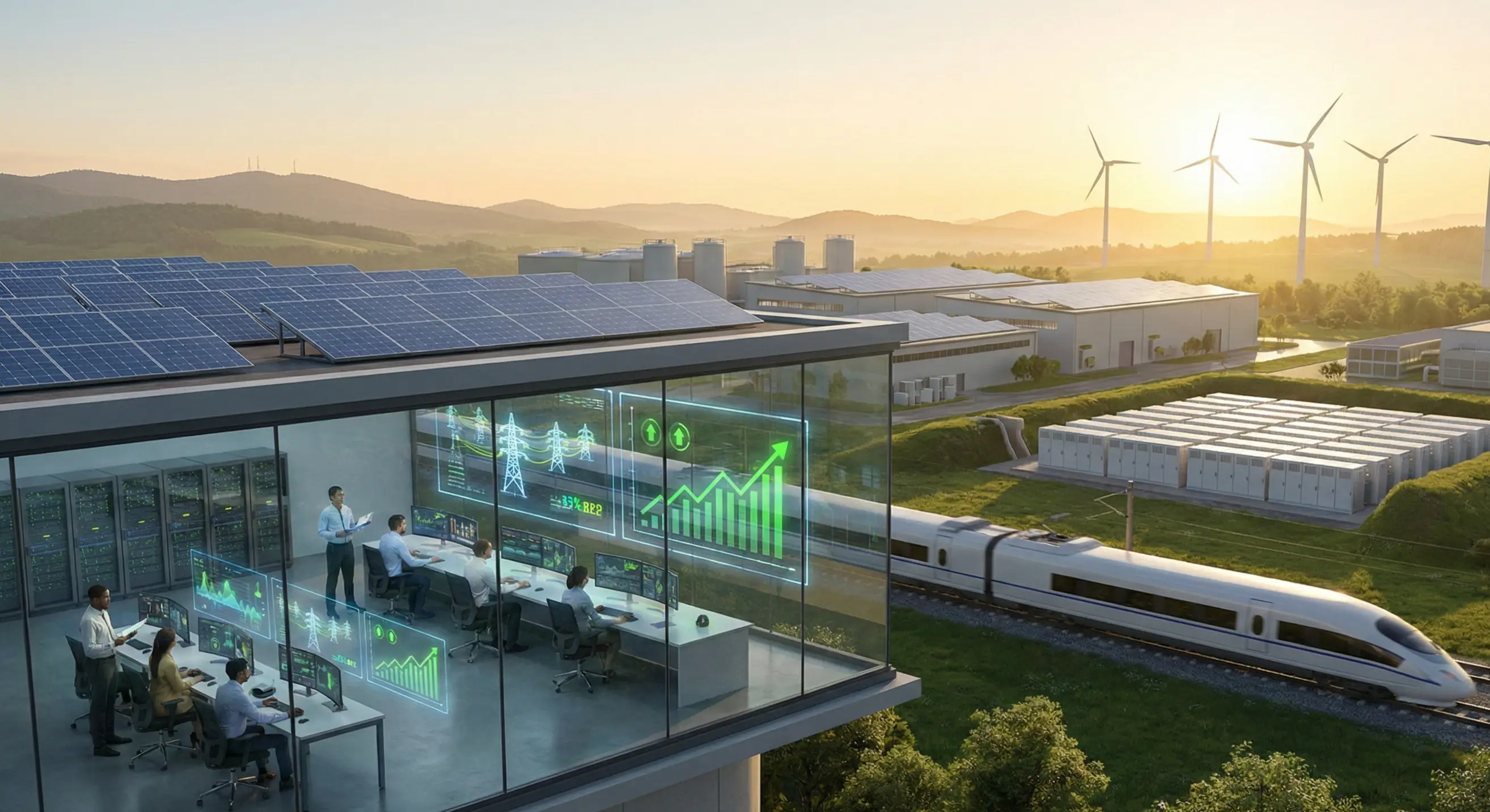

What teams typically achieve
Results vary by environment, but organizations often target:
10–15%
reduction in energy consumption
Lower
peak demand charges
Improved
energy use predictability
Faster validation of efficiency initiatives
Better alignment between cost, performance, and sustainability
The biggest gains come from making energy decisions proactively—not reactively.
Start with one site or system. Prove value. Scale.
Start
Choose a facility, production line, or energy-intensive system.
Prove
Validate predictions and savings using real operational data.
Scale
Extend optimization across additional sites, assets, or scenarios.
Common questions about energy optimization
Optimize energy with confidence—not guesswork
Start with one energy challenge and build from there.