Production optimization that increases throughput without new capex
Use intelligent digital twins to understand how your production system really behaves—identify true bottlenecks, test changes safely, and increase output with confidence.
Why increasing output is harder than it looks
Most production systems are complex, tightly coupled, and constantly changing. When decisions are based on averages or gut feel, improvements are fragile.
What's blocking throughput
Bottlenecks that shift by product, shift, or day
Variability that hides the true constraint
Local improvements that hurt downstream flow
Changeovers and schedules that look good on paper but fail in reality
Pressure to "run faster" without understanding system limits
The system-wide approach
Understand the whole system, not just individual machines
Identify the true constraint under different conditions
Test changes virtually before implementing on the floor
Optimize flow across the entire line or plant
Make data-driven decisions with confidence
From local fixes to system-level improvement
This solution applies the intelligent digital twin model to a specific operational challenge. For a full explanation of the model itself, see:
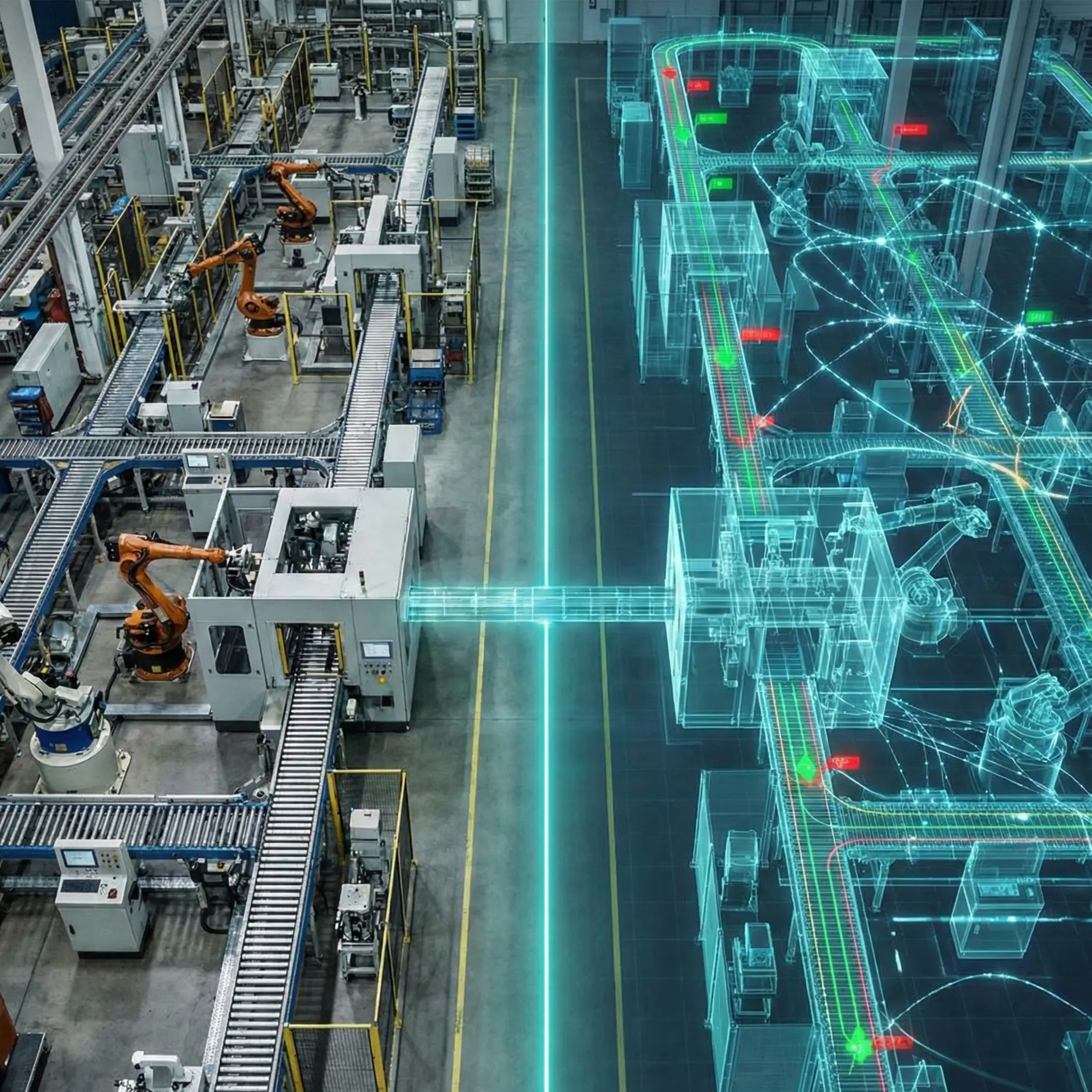
What is an Intelligent Digital TwinWith intelligent digital twins, production optimization is not about speeding up individual machines—it's about optimizing flow across the entire line or plant.
Using an intelligent digital twin, teams can:
Models how machines, buffers, and constraints interact
Reflects real operating conditions, not ideal assumptions
Shows how variability propagates through the system
Reveals the true bottleneck under different scenarios
This allows teams to test ideas virtually and choose changes that actually improve throughput, stability, and OEE.
A practical, repeatable approach
Model the production system
Create a digital representation of lines, assets, buffers, and routing.
Establish baseline performance
Understand current throughput, utilization, downtime, and variability.
Simulate improvement scenarios
Test line balancing, staffing changes, schedules, and changeover strategies safely.
Identify the true constraint
See which bottleneck limits output under different conditions.
Implement with confidence
Apply changes knowing their expected impact—and monitor results in real time.
Where production optimization delivers the most value

Bottleneck identification
Find the constraint that actually limits throughput.
Identify shifting bottlenecks across products and shifts
Separate chronic constraints from temporary noise

Line balancing
Improve flow without new equipment.
Reallocate work across stations
Reduce idle time and starvation

Changeover optimization
Reduce lost production during transitions.
Test sequencing and batching strategies
Balance flexibility with efficiency

Schedule & mix optimization
Protect output under real conditions.
Evaluate schedules against variability
Understand trade-offs between throughput, WIP, and service
Used by operations, not just analysts
Plant managers
See which constraints threaten today's plan
Evaluate trade-offs before changing priorities
Improve schedule stability
Continuous improvement teams
Test improvement ideas virtually
Focus effort where impact is highest
Validate gains with real data
Schedulers & planners
Build schedules that reflect reality
Reduce last-minute changes and expediting
Balance throughput, WIP, and service levels
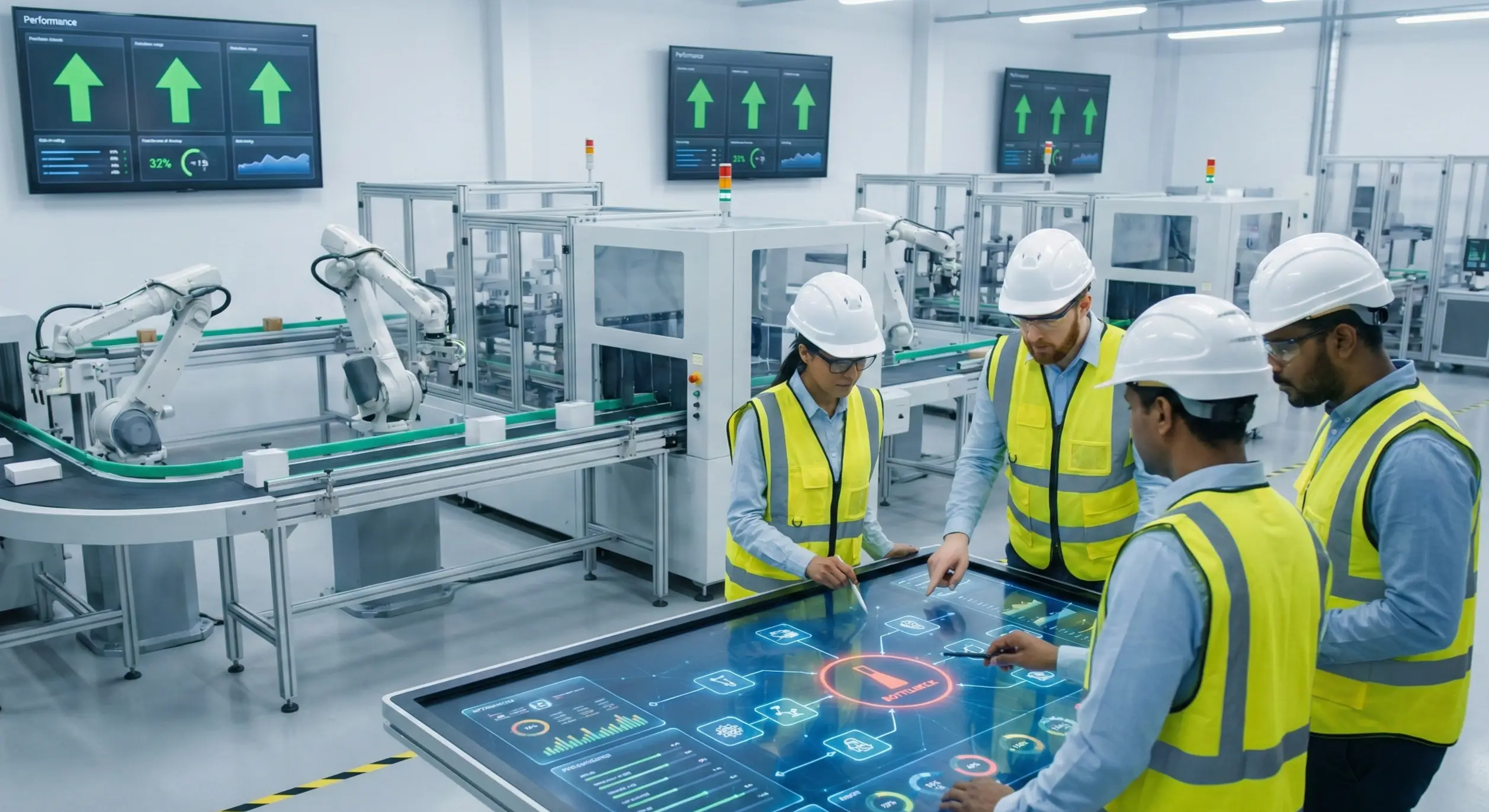

What teams typically achieve
Results vary by system and maturity, but teams often target:
5–10%
throughput increase without new capex
5–25%
OEE improvement on constrained lines
Smoother
flow with reduced WIP
More predictable schedules and output
Fewer unintended consequences from changes
The biggest gains come from fixing the right problem—not working harder everywhere.
Start with one line. Prove value. Scale plant-wide.
Start
Choose a critical line, bottleneck, or product family.
Prove
Validate insights and improvements using real operating data.
Scale
Extend optimization to additional lines, plants, or scenarios.
Common questions about production optimization
Increase output without increasing risk
Start with one production challenge—and optimize with confidence.