Smart building digital twins for efficient, reliable, and comfortable spaces
Model your buildings and campuses as living digital twins—so you can reduce energy use, prevent system failures, and deliver better occupant experiences without guesswork.
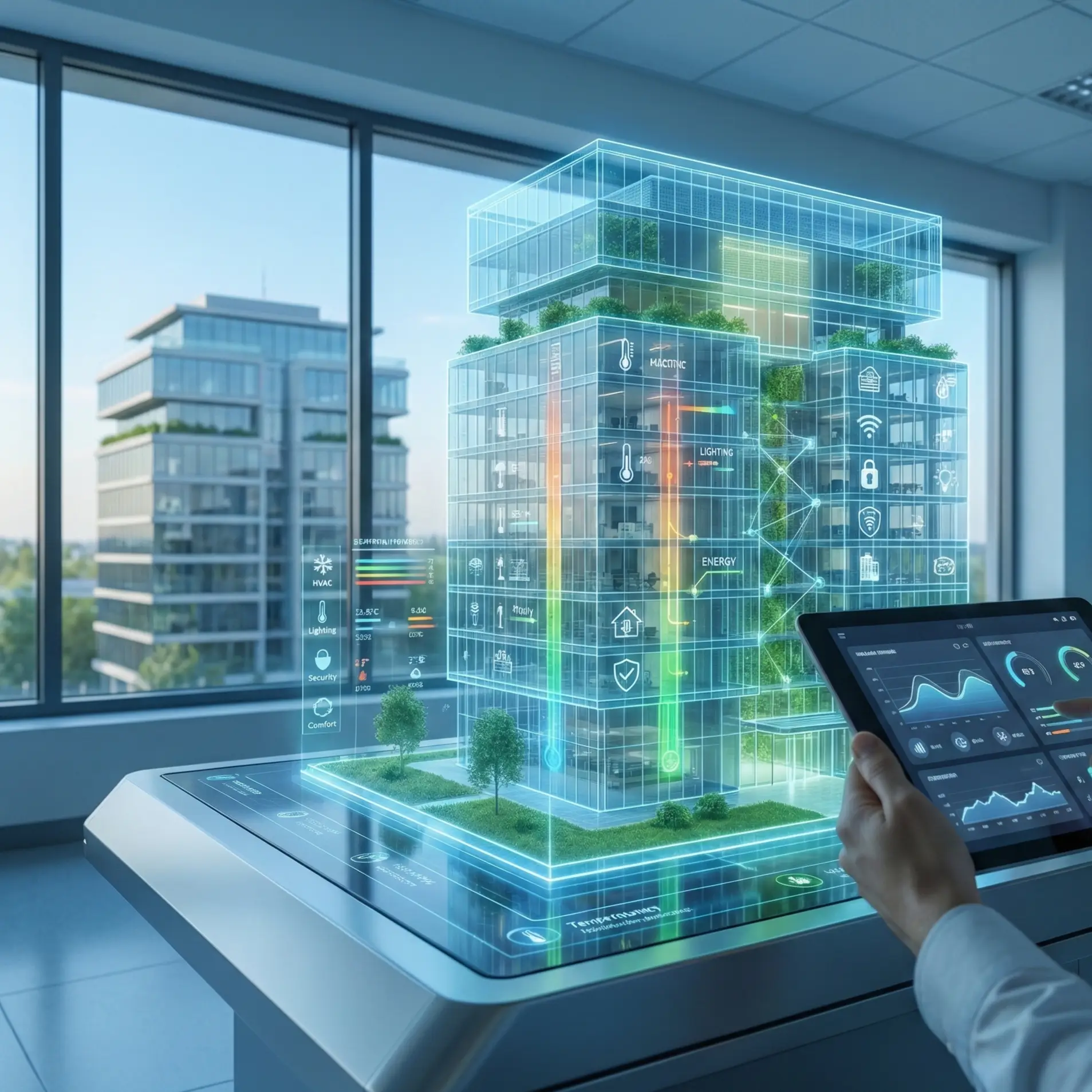
Buildings are expected to do more with less
Facilities and real estate teams are under pressure to lower operating costs, meet sustainability targets, and keep occupants comfortable—often with aging equipment, fragmented systems, and limited visibility.
What's creating complexity
Rising energy costs with unclear drivers
HVAC and system failures discovered only after complaints
Difficulty balancing comfort, efficiency, and reliability
Limited insight across portfolios of buildings
Disconnected BMS, sensors, and reporting tools
The smart building advantage
Predict and prevent system failures before occupant impact
Optimize energy use while maintaining comfort
Understand complex system interactions
Gain visibility across building portfolios
Make data-driven facility decisions
From reactive management to predictive control
In smart buildings, an intelligent digital twin acts as a living model of how systems actually behave—not just how they're configured.
It continuously represents:
HVAC, lighting, and energy systems
Occupancy patterns and usage behavior
How weather, schedules, and setpoints affect performance
How issues in one system impact comfort and cost elsewhere
With an intelligent digital twin, teams can:
Detect anomalies before occupants feel them
Test schedule or setpoint changes virtually
Understand trade-offs between comfort, energy, and wear
Make confident adjustments without disrupting operations
Smart building use cases powered by intelligent digital twins
Value across facilities and real estate roles
Facilities managers
Start each day with a clear view of system health
Focus on issues that truly affect comfort or cost
Reduce fire-fighting and after-hours calls
Energy & sustainability managers
Track energy performance in real time
Validate efficiency initiatives with real data
Support ESG and reporting requirements
Portfolio owners & operators
Compare buildings using consistent metrics
Identify where upgrades deliver the most value
Plan improvements with confidence
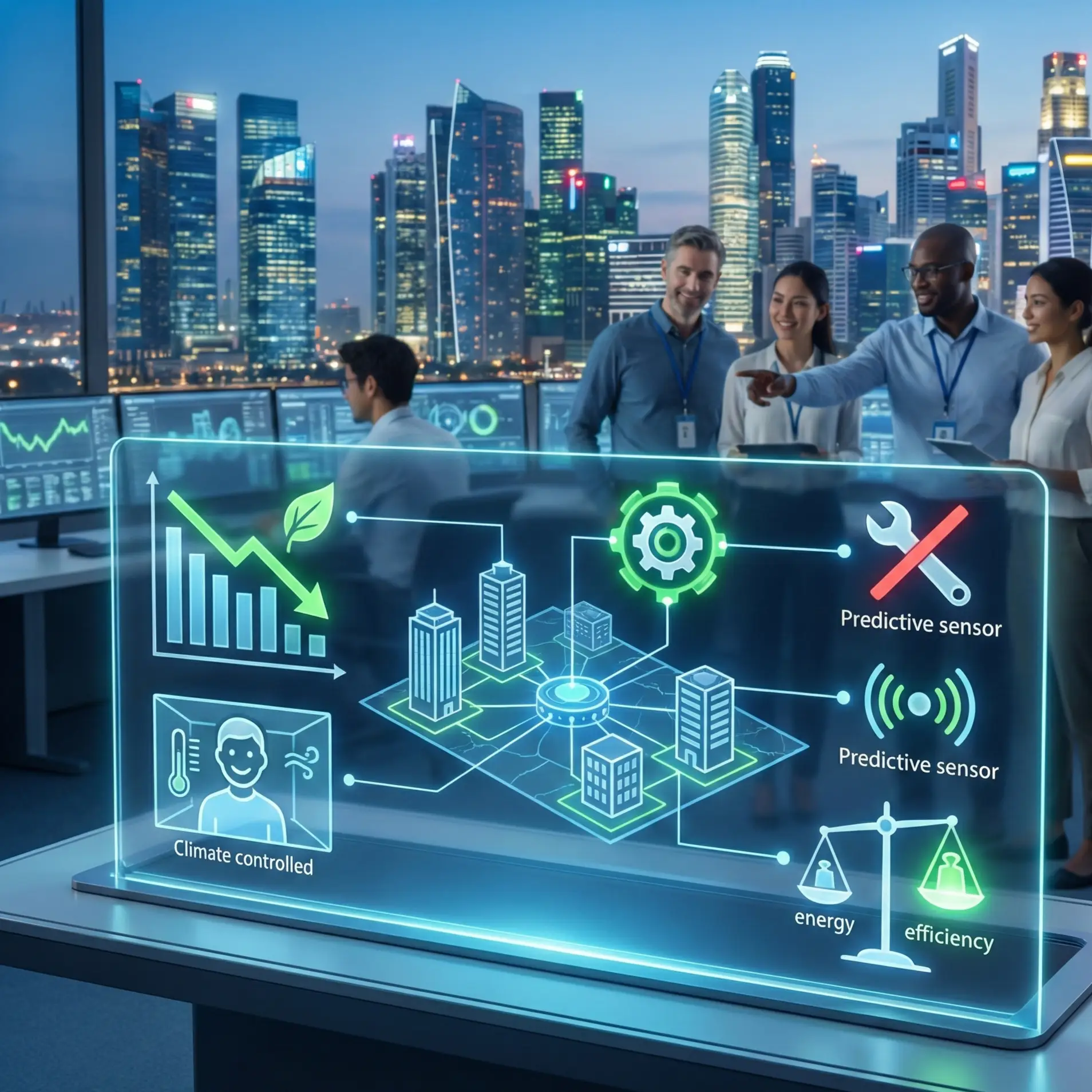

What building teams typically target
Outcomes vary by building type and condition, but teams often aim for:
10–30%
reduction in building energy use
Fewer
comfort complaints
Lower
reactive maintenance
Better
portfolio visibility
Improved system reliability and asset life.
The biggest gains usually come from early detection and smarter control—not major retrofits.
Start with one building. Prove value. Scale across the portfolio.
Start
Choose a building or system with high energy cost, frequent issues, or visibility gaps.
Prove
Use live data to establish baselines and validate improvements.
Scale
Expand to additional systems, buildings, or campuses using the same approach.
Common questions from building and facilities teams
See how intelligent digital twins can improve your buildings
Start with one building challenge—energy, comfort, or reliability—and build from there.